


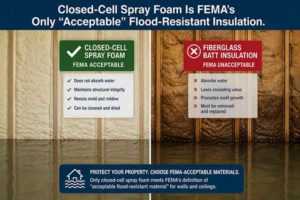
 When it comes to protecting buildings in flood-prone areas, not all insulation materials are created equal. In fact, according to FEMA guidelines, only closed-cell spray foam insulation meets the criteria for an “acceptable flood-resistant material” for walls and ceilings. That distinction isn’t just technical—it can have major implications for building durability, safety, and long-term cost savings.
Let’s break down what this means and why it matters.
What Is a Flood-Resistant Material?
FEMA defines a flood-resistant material as:
Any building material capable of withstanding direct and prolonged contact with floodwater without sustaining significant damage.
This includes exposure to contaminated water, extended saturation, and the drying process afterward. Materials that absorb water, degrade, or promote mold growth simply don’t make the cut.
Why Closed-Cell Spray Foam Stands Alone
Among all insulation types, closed-cell spray foam is the only material classified as “acceptable” by FEMA for both wall and ceiling applications. Here’s why:
1. Low Water Absorption
Closed-cell spray foam has a dense, rigid structure with sealed cells. This prevents water from penetrating the material, even during prolonged exposure.
2. Structural Integrity
Unlike traditional insulation, closed-cell foam retains its shape and performance after a flood event. It doesn’t sag, collapse, or lose its insulating properties.
3. Mold Resistance
Because it does not absorb water, closed-cell foam significantly reduces the risk of mold and mildew growth—one of the most common and costly post-flood issues.
4. Easy Cleanup
In many cases, closed-cell spray foam can be cleaned, dried, and left in place after a flood, eliminating the need for costly tear-outs and replacements.
The Problem with Fiberglass Insulation
Despite its widespread use, fiberglass batt and blanket insulation are classified by FEMA as “UNACCEPTABLE” in flood-prone areas. Here’s why:
- High Water Retention: Fiberglass absorbs and holds water, making it ineffective once wet.
- Loss of Insulating Value: Wet fiberglass loses its R-value almost entirely.
- Mold Risk: The trapped moisture creates an ideal environment for mold growth.
- Mandatory Replacement: After flooding, fiberglass insulation must be removed and replaced—adding time and expense to recovery efforts.
Why This Matters for Builders and Property Owners
Choosing the right insulation isn’t just about energy efficiency—it’s about resilience. If your property is located in a flood zone or at risk of water intrusion, using materials that meet FEMA standards can:
- Reduce repair and replacement costs after flooding
- Improve building longevity
- Help meet local building codes and insurance requirements
- Protect indoor air quality
Closed-Cell Spray Foam: A Smart Investment
While closed-cell spray foam may have a higher upfront cost compared to fiberglass, its long-term benefits—especially in flood-prone regions—make it a smart investment. It not only insulates but also acts as an air barrier, moisture barrier, and structural reinforcement.
At Master Packaging Solutions, we understand the importance of using the right materials for the right environment. Whether you’re building new or upgrading an existing structure, choosing FEMA-recognized insulation can make all the difference when disaster strikes.
Flood damage is unpredictable, but your building materials shouldn’t be. With FEMA clearly identifying closed-cell spray foam as the only acceptable insulation for flood resistance, the choice becomes much clearer for anyone serious about durability and protection.
If you’re planning a project in a flood-prone area, it’s time to rethink insulation—and invest in a solution that’s built to withstand the worst.
Looking to learn more about spray foam insulation or protective packaging solutions?
Visit www.masterpkg.com for expert insights and industry-leading solutions.
